Professional Wheelchair & Mobility Aids Manufacturer | Feiyang Medical Phone: +86-13809226584 E-mail: fymed@vip.163.com

Author: Site Editor Publish Time: 2026-09-18 Origin: Site
Walking into a showroom, you see pristine medical equipment gleaming under bright lights. The reality of daily use tells a very different story. Daily use in clinical or home-care environments subjects equipment to repetitive mechanical stress. Constant moisture and variable weight loads push these devices to their absolute limits.
Premature equipment failure disrupts essential care routines immediately. It severely compromises patient dignity and safety during highly vulnerable moments. Rapid breakdowns also inflate procurement costs by forcing sudden emergency replacements. Facilities often find themselves caught in a cycle of constant repairs.
We provide an evidence-based framework to help you understand this reality. You will learn exactly how daily operational rigor impacts critical components over time. We will show you how to evaluate key specifications for maximum longevity. Finally, you will discover how to source reliable models designed to withstand actual clinical demands.
Care environments demand relentless mechanical performance. Understanding the specific physical forces at play helps you anticipate equipment failure. We must examine how daily movement physically breaks down core structural elements.
Cyclical loading destroys electric motors steadily over time. Most devices operate on strict mechanical duty cycles. A common rating dictates two minutes of active lifting followed by eighteen minutes of rest. Caregivers frequently push past these limits during busy morning shifts. They move from room to room without pausing. This continuous use overheats internal components rapidly. The thermal overload degrades motor windings and shortens actuator lifespans.
Battery degradation presents another major daily challenge. Devices undergo constant charging and discharging cycles. You can expect noticeable battery capacity loss after 12 to 18 months of daily charging. The chemical cells inside simply lose their ability to hold a full charge under heavy loads.
Lateral movements test structural integrity every single day. Uneven weight distribution occurs naturally when patients shift during transitions. This daily shifting targets the main frame and its primary welds.
Casters endure severe environmental hazards daily. Institutional floors and home carpets hide invisible threats. Floor transitions act like tiny speed bumps, sending repeated shockwaves through the chassis. Hair, lint, and dust wrap tightly around the wheel bearings. This debris restricts smooth movement immediately.
Caregivers must push harder to overcome this friction. The extra force strains the entire frame. Furthermore, locking mechanisms wear down from repeated foot stomps. Over time, this degradation causes hazardous drift during patient transfers. A standard transfer chair requires quarterly caster cleaning to prevent sudden locking failures.
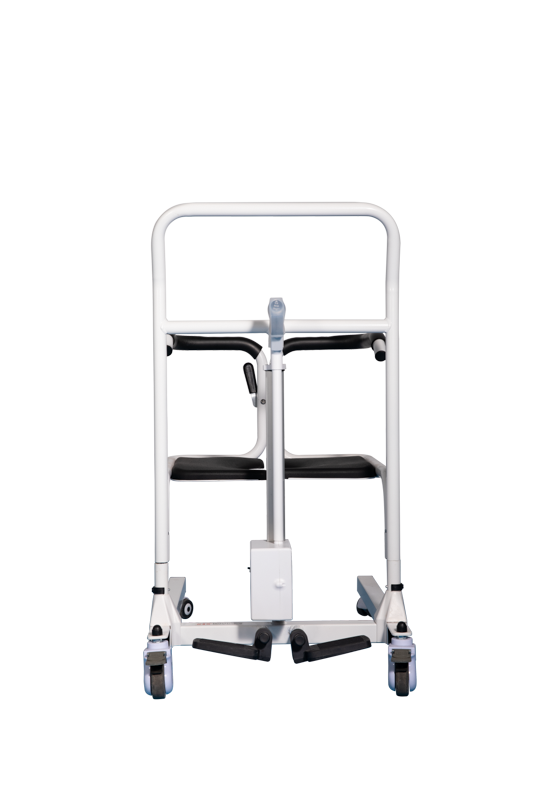
Mechanical stress only accounts for half of the daily wear. The operating environment introduces severe chemical and moisture challenges. Hygiene routines actively degrade vulnerable materials.
Bathing routines subject equipment to intense, direct moisture. When you use an electric lift patient transfer chair shower model, it faces heavy water streams. Standard indoor units simply cannot survive this harsh environment. Water easily bypasses basic seals, reaching sensitive electrical panels and unpainted internal steel tubes.
Daily exposure to shower water accelerates oxidation dramatically. Soaps, shampoos, and bodily fluids act as highly corrosive agents. They penetrate inferior powder coatings easily over time. Capillary action draws moisture into the smallest exposed joints. Once water reaches the interior tubing, internal rust spreads silently. This hidden corrosion compromises the entire structural integrity before you even notice surface rust.
Hygiene protocols demand rigorous cleaning after every patient transfer. Facilities rely heavily on strong hospital-grade disinfectants. Bleach-based solutions and quaternary ammonium compounds kill dangerous pathogens effectively. However, they rapidly degrade non-resistant materials.
You must align hardware capabilities directly with real-world usage. Evaluating exact transfer chair specifications prevents premature breakdowns. We recommend looking closely at the following technical areas to ensure longevity.
Specification Evaluation Matrix
| Component Area | Standard Specification | High-Durability Requirement |
|---|---|---|
| Weight Capacity | Rated exactly for patient weight | 20-30% buffer above average patient weight |
| Waterproofing | No formal IP rating | IPX4 or IPX5 certified electrical components |
| Power System | Standard lead-acid (heavy, slow charge) | Lithium-ion (500+ cycles, fast charge) |
| Upholstery | Stitched seams, standard foam | Seamless, high-density molded anti-microbial foam |
Operating a device constantly at 90% of its maximum weight capacity accelerates wear. The motor strains harder, and the frame flexes more deeply. We strongly recommend factoring in a 20% to 30% safety buffer for daily use. If your average patient weighs 200 pounds, choose a device rated for at least 260 pounds. This operational buffer reduces motor heat and significantly extends the overall equipment lifespan.
Moisture protection remains non-negotiable for bathing routines. You must check the official Ingress Protection (IP) ratings. Look specifically for IPX4 or IPX5 certifications on all electrical components. These ratings ensure the electronics survive splashing water and low-pressure jets. Without these exact ratings, daily shower routines become severe electrical hazards.
Compare lithium-ion against traditional lead-acid specifications carefully. Lithium-ion batteries provide lighter weight and faster charging times. They typically offer 500 to 1000 complete charge cycles. After this point, battery capacity drops below operational safety thresholds. Lead-acid batteries cost less initially but require strict, demanding charging maintenance. Know your daily transfer volume to choose the appropriate power system.
Seat surfaces endure continuous friction and heavy compression. You need seamless, anti-microbial materials to survive daily use. High-density molded foam is essential for user comfort. It prevents daily compression flattening entirely. Seamless designs stop fluid ingress at the source. This prevents bacteria growth and foul odors inside the seat cushion.
Even the highest quality equipment fails under improper use. Caregivers often make unintentional operational errors. These common mistakes dramatically reduce equipment longevity and compromise safety.
Caregivers unknowingly burn out expensive motors during busy shifts. They operate the electric lifts continuously without allowing mandatory cool-down periods. The internal temperature of the actuator rises rapidly. This thermal stress melts the internal wiring insulation. You must train staff to observe the strict two-minute operation limits.
Poor charging habits destroy battery cells rapidly. Many users leave electric models plugged in perpetually over the weekend. Others let the battery drain completely to zero before recharging. Both extremes degrade battery chemistry heavily. You should implement a structured daily charging routine to preserve battery health.
Skipping basic maintenance turns minor friction into catastrophic structural failure. Wheels collect hair and debris constantly. Moving joints lose vital lubrication over time. Failing to clear caster tracks quarterly increases rolling friction immensely. Caregivers then force the device forward, putting sheer stress on the main frame welds. Simple quarterly lubrication prevents these major breakdowns.
Using the wrong equipment for a specific task causes immediate damage. Devices have strict environmental operational limits. Using indoor-rated units for shower routines causes immediate rust and electrical shorts. Pushing smooth-wheel models over high door thresholds bends the lower chassis. These misaligned use cases lead to immediate warranty voiding. You must match the equipment exactly to its intended environment.
What to watch out for during implementation:
The vendor relationship extends far beyond the initial delivery day. A good partner ensures your equipment stays operational for years. Evaluating a transfer chair supplier requires looking past the initial purchase quote.
Post-purchase support defines true long-term vendor value. Mechanical parts eventually wear out under daily stress. You will inevitably need replacement batteries, new casters, or fresh slings. You must ask if they stock localized replacement parts. Quick access to critical spares minimizes equipment downtime and keeps your care routines flowing smoothly.
Warranty clarity prevents future financial disputes. You must read the fine print very carefully. Always differentiate between frame warranties and electrical component warranties. Manufacturers often provide three to five years of coverage for the metal frame. However, electrical parts frequently only get one year of protection. Knowing this exact timeline helps you plan maintenance schedules accurately.
Thorough documentation proves fundamental vendor reliability. Ensure they provide clear FDA or CE certifications for their devices. Ask for comprehensive user manuals containing detailed maintenance schedules. They should also outline clear, simple protocols for filing warranty claims. Extreme transparency here indicates a highly trustworthy long-term partner.
Daily use inevitably degrades any mechanical device over time. Moving heavy weights introduces constant structural stress. Moisture and harsh chemicals attack vulnerable materials aggressively. However, matching exact specifications to the harsh realities of daily care mitigates early failure entirely.
You must take immediate, proactive action today. First, audit your facility's daily transfer volume to determine weight capacity needs. Next, cross-reference the necessary IP ratings to ensure safe shower use. Finally, demand clear maintenance Service Level Agreements (SLAs) from your shortlisted suppliers. Following these exact steps ensures your equipment delivers safe, reliable performance for years.
A: A standard unit typically lasts three to five years for the main frame. Wear-and-tear components, like batteries and casters, usually require replacement every one to two years. The actual lifespan depends heavily on your daily transfer volume, environmental exposure, and strict adherence to quarterly maintenance routines.
A: No. Most shower-rated models feature IPX4 or IPX5 waterproofing. These ratings protect against splashing water and low-pressure jets during normal bathing. They are not rated for full submersion. Submerging the device will cause immediate electrical failure, destroy the battery, and create severe safety hazards.
A: Field experience shows batteries and caster locks fail first. Batteries degrade from improper charging habits, losing capacity after 12 to 18 months. Caster locks break down because hair and floor debris jam the internal bearing mechanisms, creating excessive friction during daily movement.
A: Daily use does not void the warranty if you operate the device within its rated limits. However, manufacturers differentiate strictly between "normal wear and tear" and actual manufacturing defects. Components like wheels and upholstery degrading over time are rarely covered. Warranty claims always require proof of proper maintenance.


