Professional Wheelchair & Mobility Aids Manufacturer | Feiyang Medical Phone: +86-13809226584 E-mail: fymed@vip.163.com

Author: Site Editor Publish Time: 2025-08-22 Origin: Site
Using a medical walker stick correctly is crucial for improving mobility and maintaining independence while reducing the risk of falls or injury. Improper use can lead to discomfort, fatigue, and even accidents, which is why understanding how to safely and effectively use this mobility aid is essential. This article will provide detailed guidance on adjusting the walker stick, walking techniques for different environments, common mistakes to avoid, and maintenance tips. At Foshan Feiyang Medical Equipment Co., Ltd., we not only focus on providing high-quality products but also on educating users to maximize safety and benefit.
Correctly adjusting the height of your medical walker stick is the foundation for safe and comfortable use. An improperly sized stick can cause poor posture, muscle strain, and an increased risk of falling.
If the stick is too tall, it forces you to extend your arm unnaturally, causing shoulder and wrist pain and throwing off your balance. If it is too short, you might lean forward, putting undue pressure on your back and hips. Either situation results in poor weight distribution, making walking more tiring and less safe.
Proper height adjustment encourages good posture and efficient movement, helping to prevent overuse injuries and discomfort over time. In addition, correct height adjustment allows for a natural arm swing, which is essential for maintaining rhythm and balance during walking.
Stand up straight with your arms relaxed at your sides, wearing the shoes you normally use. The handle of the walker stick should reach the crease of your wrist. When gripping the handle, your elbow should be bent at roughly a 15-degree angle—this slight bend is key to preventing stiffness and allowing natural arm swing.
Most medical walker sticks offer adjustable height settings, usually in increments of about an inch. To adjust, loosen the locking mechanism, slide the stick to the desired length, and securely tighten it. Test the setting by walking a few steps to ensure it feels natural.
Since your posture or footwear might change, it’s wise to periodically recheck the height and make necessary adjustments. For example, switching from flat shoes to heels will require a different length setting.
Using a medical walker stick effectively means adapting your walking style to the environment to maintain stability and safety.
Indoor surfaces are usually flat but can present hazards like rugs, cords, or slippery tiles. Walk slowly and deliberately. Place the medical walker stick a few inches ahead of your leading foot, then step forward, transferring your weight smoothly. Keep your gaze forward to anticipate obstacles.
Be careful on slippery or wet floors—move cautiously and avoid sudden shifts in direction. Remove loose rugs or tape down cords that could cause trips. When changing directions indoors, pivot on your feet slowly rather than twisting your body abruptly, which can cause imbalance.
Outdoors, surfaces are less predictable: sidewalks may be uneven, and you might encounter gravel, grass, or wet leaves. When walking outside, keep your pace steady and use the medical walker stick to probe the terrain ahead.
On inclines, adjust your posture: lean slightly forward when going uphill, and lean back gently when descending. Always plant the stick firmly before stepping to avoid slips.
Steps, curbs, or thresholds require extra care. Use handrails if available and place the medical walker stick on the stable surface first before stepping up or down. If there is no handrail, step up with your stronger leg first, then bring up your weaker leg, always ensuring the stick is stable.
For rough surfaces, slow down and place each step carefully. Anti-slip rubber tips on the medical walker stick are vital for traction; inspect and replace them regularly to maintain grip.
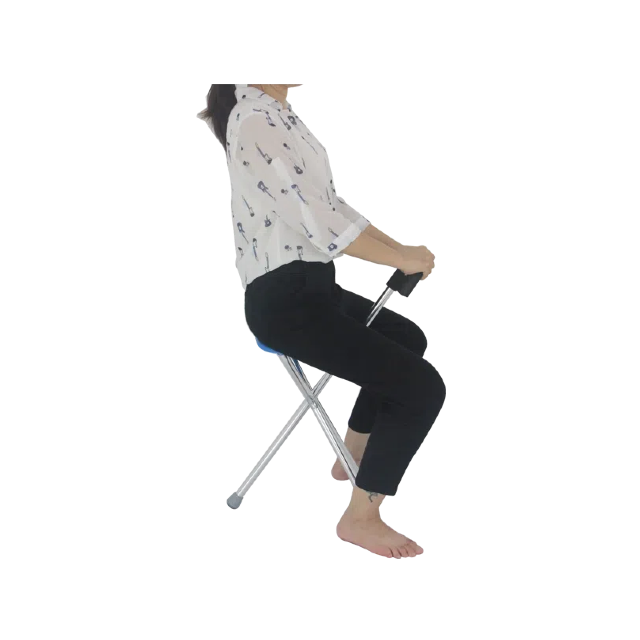
Even experienced users sometimes make mistakes that reduce safety or comfort. Avoiding these errors can enhance your walking experience.
Irregular step length can destabilize your walk and increase fall risk. Aim for consistent, moderate steps matched to the pace of your medical walker stick. Avoid overreaching, which leaves you unsupported.
The medical walker stick should aid balance and partially support your weight but not carry it all. Overloading your wrists or hands can cause pain and fatigue. Distribute your weight evenly through your legs.
Poor posture, such as leaning too far forward or to one side, negatively impacts balance. Keep your back straight, shoulders relaxed, and head up to ensure safe, efficient walking.
Regularly check the rubber tips, grips, and joints for wear or looseness. Using a damaged walker stick can cause accidents.
Many users only practice indoors and are unprepared for outdoor challenges. Gradually familiarize yourself with different terrains and obstacles to build confidence and skill.
Taking good care of your medical walker stick preserves its function and safety.
Check the rubber tips for cracks or excessive wear at least once a month. Replace them promptly to maintain traction. Examine handles for looseness or damage, and tighten any loose screws or bolts in the frame.
Wipe down your walker stick regularly with a damp cloth and mild soap to remove dirt and sweat. Dry thoroughly to prevent rust. Store it in a dry, sheltered place away from extreme heat or moisture.
For adjustable or foldable models, professional inspection once a year can ensure moving parts function correctly and safely. Keeping your medical walker stick in good condition not only protects you but also extends the product’s useful life, providing better value over time.
Proper adjustment, mindful walking techniques, avoidance of common errors, and routine maintenance are all critical for using a medical walker stick safely and effectively. With the right knowledge and care, you can enjoy greater mobility, comfort, and confidence every day. Foshan Feiyang Medical Equipment Co., Ltd. is committed to providing reliable medical walker sticks and support to help you maintain your independence. Learning and practicing correct usage ensures not only a better experience but also prolongs the lifespan of your mobility aid. For advice or to explore our full product range, please contact us today.


