Professional Wheelchair & Mobility Aids Manufacturer | Feiyang Medical Phone: +86-13809226584 E-mail: fymed@vip.163.com

Author: Site Editor Publish Time: 2025-09-14 Origin: Site
Mobility is something many of us take for granted—walking to the kitchen, stepping outside for fresh air, or moving around the neighborhood. But for millions of elderly individuals, people recovering from surgery, or those living with long-term health conditions, mobility is not always easy. Even short distances can pose challenges, creating a sense of dependence on others. That is where medical walking sticks play an essential role.
A medical walking stick may look like a simple tool, but it carries incredible importance. It provides physical stability, boosts confidence, and most importantly, helps individuals regain a sense of independence. This article explores how medical walking sticks enhance lives, the features that make them effective, the different types available, and how to choose the right one for personal or healthcare use. By the end, you will understand why this seemingly small device makes such a big impact.
Mobility is tied closely to freedom and dignity. The ability to move independently allows people to manage personal tasks, maintain social connections, and enjoy recreational activities. When mobility is restricted, it can lead to frustration, isolation, and even depression.
Medical walking sticks restore a measure of independence by supporting balance, reducing the risk of falls, and offering confidence in every step. For elderly individuals, especially, this means being able to walk safely to the bathroom at night or go for a walk without constant fear of falling. For patients in recovery, it means taking those important first steps toward regaining strength.
Walking sticks provide extra points of contact with the ground, improving balance and reducing pressure on the legs and joints. This is particularly helpful for individuals with arthritis, muscle weakness, or neurological conditions that affect coordination.
Beyond physical stability, a walking stick provides reassurance. Many users report that they feel more secure knowing they have something to lean on if needed. This confidence often encourages people to stay active, which further improves health and well-being.
Falls are one of the most common causes of injury among older adults. A sturdy medical walking stick reduces this risk significantly by helping users stabilize themselves on uneven or slippery surfaces.
By enabling safer movement, walking sticks allow individuals to perform daily activities on their own. They reduce the need for constant caregiver assistance, restoring dignity and self-reliance.
Not all walking sticks are the same, and choosing the right one involves considering features that directly affect comfort, safety, and usability.
Walking sticks are made from different materials, including aluminum, steel, and wood. Aluminum models are lightweight and easy to handle, making them ideal for long-term use. Steel walking sticks provide maximum strength and are suited for heavier users, while wooden sticks offer traditional aesthetics but can be heavier.
The handle is critical for comfort and grip. Ergonomic handles reduce hand strain, while foam or rubberized grips prevent slipping. Some designs, like offset handles, distribute weight more evenly to reduce wrist stress.
Since users vary in height, an adjustable walking stick is often the best choice. This ensures that the stick fits the user perfectly, with the elbow bent slightly when the hand is on the handle. A proper fit makes walking safer and more comfortable.
The base of the stick determines stability. Standard rubber tips are suitable for everyday indoor use, while wider or quad bases provide more stability on uneven ground. Some advanced designs even include anti-slip or shock-absorbing tips.
For individuals who need a walking stick occasionally or travel frequently, foldable models are practical. They can be stored easily in a bag or carried discreetly, ensuring support is always available when needed.
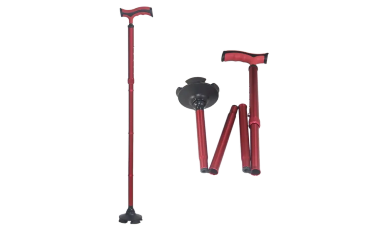
There are several types of walking sticks tailored to different needs:
Standard Walking Sticks: Simple, single-point sticks designed for general balance support.
Quad Canes: Sticks with four small feet at the base, offering greater stability.
Folding Walking Sticks: Convenient, portable designs that collapse for easy transport.
Ergonomic Walking Sticks: Designed with special handles and lightweight frames to minimize strain.
Specialty Walking Sticks: Some include added features such as seats, shock absorbers, or adjustable wrist straps.
Each type caters to a different user group, from those needing occasional support to individuals requiring constant stability.
For home environments, walking sticks provide the reassurance needed to move safely through hallways, kitchens, and bathrooms. Many families purchase them for elderly relatives to reduce the risk of falls and give loved ones greater independence.
In these settings, lightweight and adjustable designs are often preferred. The goal is to provide everyday support without making the stick cumbersome or difficult to use. Non-slip rubber tips and comfortable handles are essential to prevent accidents on tiled or wooden floors.
In hospitals, rehabilitation centers, and nursing homes, walking sticks are used as part of therapy and daily living support. Patients recovering from surgeries such as hip replacements or knee procedures rely on walking sticks to begin moving again safely.
Healthcare providers often recommend adjustable and durable models to accommodate multiple users. Hygiene is also a consideration, so materials that are easy to clean and sanitize are important in these environments. Walking sticks play a key role in rehabilitation, helping patients transition from limited mobility to walking independently again.
While safety is the primary concern, comfort and style should not be overlooked. A stick that is uncomfortable to grip or too heavy will discourage use, while a stylish design can make the user feel more confident carrying it in public. Today, manufacturers produce walking sticks in different colors and finishes, turning them into functional accessories rather than purely medical tools.
Walking sticks are generally affordable, making them accessible to most people who need them. While basic models are inexpensive, investing in a high-quality, durable stick often pays off in the long run. Better grips, adjustable features, and stronger frames ensure longer-lasting support.
For healthcare facilities purchasing in bulk, cost-effectiveness is important, but it should not come at the expense of quality and patient safety.
Like many mobility aids, walking sticks are evolving with technology. Lightweight composite materials, ergonomic innovations, and even smart walking sticks with sensors are being developed. These advanced models can monitor walking patterns, detect falls, or even include built-in lights for nighttime use.
Such innovations promise to further enhance independence and safety for users in the future, combining traditional reliability with modern technology.
Medical walking sticks may appear simple, but their role in enhancing mobility and independence is profound. They provide balance, reduce fall risks, and most importantly, give users the confidence to move freely. For elderly individuals, patients in recovery, or those with chronic conditions, a walking stick can make the difference between dependence and independence.
Choosing the right walking stick involves considering materials, comfort, adjustability, and stability features. Whether used at home or in healthcare facilities, the right stick empowers individuals to regain control over their daily lives.
As demand for reliable mobility aids continues to grow, companies such as Foshan Feiyang Medical Equipment Co., Ltd. are leading the way with high-quality, durable, and thoughtfully designed walking sticks that truly make a difference in people’s lives.

