Professional Wheelchair & Mobility Aids Manufacturer | Feiyang Medical Phone: +86-13809226584 E-mail: fymed@vip.163.com

Author: Site Editor Publish Time: 2025-12-18 Origin: Site
Mobility is an essential aspect of everyday life. For individuals with physical disabilities or mobility impairments, having the ability to move freely and independently can significantly impact their quality of life. One of the most important tools for achieving mobility is the wheelchair. Over the centuries, wheelchairs have evolved from simple, rudimentary designs to advanced manual chairs that offer both comfort and freedom. This article explores the evolution of manual wheelchairs, their impact on mobility, and how innovations have shaped the lives of wheelchair users.
The history of the wheelchair is long and complex, spanning across different cultures and centuries. The earliest documented evidence of a wheeled chair dates back to ancient China, where a wheeled cart was used to carry individuals with mobility impairments. These early designs were basic and were not specifically intended as mobility aids but were rather transportation devices for people who were unable to walk.
In the 6th century, there is a mention of a wheeled chair in China used by Emperor Yang of the Sui dynasty. However, it was not until the 16th century that more recognizable forms of wheelchairs began to emerge. The first known manual wheelchair designed specifically for mobility was created in 1595 for King Philip II of Spain. This wheelchair had four wheels, a high backrest, and was designed to allow the king to move around with some level of independence despite his limited mobility.
While early wheelchairs were often bulky and required an attendant for propulsion, they marked the beginning of a new era in mobility aids. These designs laid the foundation for future innovations in wheelchair technology.
A major advancement came in the 17th century with the invention of the first self-propelled wheelchair. In 1655, a paraplegic German watchmaker named Stephan Farfler developed a chair with hand-cranked gears, allowing the user to propel themselves independently. This was a revolutionary idea at the time, as it marked a shift from relying on attendants for mobility.
Despite this innovation, self-propelled wheelchairs remained a rarity. The concept of personal independence through mobility aids took some time to gain widespread acceptance. It wasn’t until the 19th century that the modern self-propelled wheelchair began to take form.
One of the significant developments in this era was the introduction of the “Bath Chair” in the early 1800s in England. This design featured two large rear wheels and a smaller front wheel, which allowed an attendant to push or pull the chair, enabling mobility for people who could not walk. While this model was still not self-propelled, it was an important step toward providing greater mobility for individuals with disabilities.
The real revolution in wheelchair design began in the early 20th century. During World War I, thousands of soldiers who were injured during the war returned home with life-altering injuries, including amputations and paralysis. This created an urgent need for better mobility solutions. As a result, the wheelchair industry saw significant advances in both functionality and design.
One of the most pivotal developments was the invention of the first folding wheelchair in 1932 by Everest & Jennings. This wheelchair featured a tubular steel frame and could be easily folded for storage or transport. The lightweight, portable nature of this chair made it incredibly popular, especially with the rising number of individuals in need of mobility aids after the war. The folding wheelchair became the standard for manual wheelchairs and allowed for a level of independence that was previously unavailable to many individuals.
Additionally, the development of the rigid-frame wheelchair in the 1940s marked a significant leap forward. This type of wheelchair was made of a fixed frame that provided greater strength and stability while still being lightweight. It was more efficient than folding chairs and quickly gained traction among athletes and individuals with disabilities who needed a durable and reliable chair.
After World War II, the focus of wheelchair design began to shift toward comfort, user ergonomics, and customization. In the 1950s and 1960s, wheelchair manufacturers began to consider the diverse needs of wheelchair users and improve comfort features. Adjustable footrests, padded armrests, and more ergonomic seating were incorporated into wheelchair designs, allowing users to be seated more comfortably for longer periods.
During this period, innovation was driven by the growing awareness of the importance of providing mobility solutions that addressed both the practical and emotional needs of wheelchair users. It was no longer just about getting from point A to point B; it was about doing so with comfort, dignity, and freedom.
In the 1970s, the introduction of aluminum as a primary frame material revolutionized wheelchair design. Aluminum is lightweight yet strong, making it an ideal material for building wheelchairs. These chairs were not only lighter but also more resistant to rust, making them more durable for long-term use. At the same time, more customizable features were introduced, such as adjustable seat widths and depths, allowing users to tailor their wheelchairs to their specific needs.
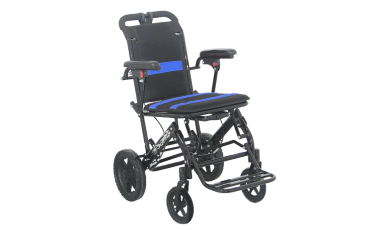
The 21st century has seen a dramatic shift in how manual wheelchairs are designed and used. Technological advancements, innovative materials, and user-centric design have played a central role in shaping modern manual wheelchairs.
Today’s manual wheelchairs are designed with both functionality and comfort in mind. The use of materials like titanium and carbon fiber has resulted in wheelchairs that are incredibly lightweight yet strong. Titanium, for instance, offers a superior strength-to-weight ratio and is resistant to corrosion, making it perfect for high-performance wheelchairs. Carbon fiber, on the other hand, is used for its lightweight properties and durability, particularly in sports wheelchairs or racing models.
Ergonomics has also become a significant focus in recent wheelchair designs. Modern chairs are adjustable in terms of footrest height, seat depth, backrest angle, and even wheel position. These adjustments help to improve comfort and reduce the risk of pressure sores or muscle strain for users who spend long periods in their chairs.
Additionally, manual wheelchairs have become more versatile and adaptable. Many now feature modular components that can be customized for specific activities, such as sports or travel. For example, manual wheelchairs for athletes have specialized frames, sports wheels, and other modifications to enhance speed and performance. Similarly, travel wheelchairs are designed to be ultra-lightweight and compact, allowing users to easily fold and transport them.
The evolution of manual wheelchairs has had a profound impact on mobility, independence, and the overall quality of life for individuals with mobility impairments. The development of self-propelled chairs, folding frames, lightweight materials, and ergonomic designs has made it possible for people to regain their independence and participate more fully in society.
Before the advent of modern manual wheelchairs, people with disabilities often had to rely on caregivers or family members for assistance with mobility. However, with the introduction of self-propelled, lightweight wheelchairs, individuals could navigate their environments independently, whether they were at home, at work, or out in public. This not only improved the user’s physical mobility but also enhanced their emotional well-being, as they were no longer dependent on others for everyday activities.
The impact on social inclusion has been equally significant. Manual wheelchairs have enabled individuals with mobility impairments to engage in activities that were previously inaccessible, such as travel, sports, and recreation. Wheelchair users can now participate in a wide range of events, from local community gatherings to international sports competitions, all thanks to the evolution of wheelchair design.
Today, several companies continue to lead the way in wheelchair design, ensuring that manual wheelchairs meet the diverse needs of users. Foshan Feiyang Medical Equipment Co., Ltd. is one such manufacturer that has made significant contributions to the wheelchair industry. Their commitment to innovation and quality has resulted in the production of durable, comfortable, and high-performance wheelchairs. Feiyang’s wheelchairs are designed with the latest materials and technologies, offering users mobility aids that are lightweight, functional, and user-friendly. By continuously advancing wheelchair design, companies like Feiyang play a crucial role in improving the lives of those with mobility impairments.
The evolution of manual wheelchairs has been a journey of innovation, improving both the functionality and independence of individuals with mobility impairments. From the earliest wheeled seats of ancient times to the lightweight, ergonomic models of today, the wheelchair has undergone remarkable transformations. These advancements have not only enhanced mobility but have also played a pivotal role in increasing social participation, personal independence, and overall quality of life for wheelchair users.
The future of manual wheelchairs continues to be shaped by ongoing innovation in materials, design, and technology. As manufacturers like Foshan Feiyang Medical Equipment Co., Ltd. continue to refine and improve wheelchair designs, we can expect even greater mobility solutions that empower individuals to live independently, travel freely, and engage in activities that enrich their lives.


