Professional Wheelchair & Mobility Aids Manufacturer | Feiyang Medical Phone: +86-13809226584 E-mail: fymed@vip.163.com

Author: Site Editor Publish Time: 2026-09-26 Origin: Site
B2B medical equipment logistics carry incredibly high stakes. Damaged goods in transit mean compromised patient safety. They also cause delayed facility deployments and eroded wholesale margins. Packaging is never just a generic commodity in this industry. Rather, it serves as a critical extension of product quality. It ensures regulatory compliance for distributors across global supply chains. When you ship complex medical devices, generic corrugated boxes usually fail. You need specialized solutions. This guide evaluates the technical and commercial factors involved in protective packaging. We will explore how to select the right packaging materials. You will learn the best structural protocols for various classes of physical therapy gear. By the end, you can make smarter logistical decisions for your business operations. This ensures your products arrive safely, your shipping budgets remain optimized, and your medical clients stay completely satisfied with their daily unboxing experience.
Wholesale distribution models rely entirely on predictable margins and smooth logistics. When you ship medical gear in inadequate packaging, you invite a cascade of direct and indirect costs. Problem framing begins by looking at the immediate fallout of transit damage. Products arriving broken trigger complex Return Merchandise Authorization (RMA) workflows. Your team must process the return, inspect the damage, and coordinate reverse logistics. These administrative tasks drain valuable labor hours. Furthermore, replacement costs rapidly destroy wholesale profit margins. You also risk severely damaging your brand reputation among clinical buyers. Hospital procurement teams remember which distributors deliver intact goods and which ones cause launch delays.
We must define what success looks like at the wholesale level. Good packaging delivers a zero-defect unboxing experience for the end user. It also optimizes pallet density. You want boxes that stack perfectly onto standard wooden pallets without overhanging. This maximizes warehouse space and lowers freight bills. Additionally, successful packaging prioritizes ease of warehouse handling. Workers should easily grip, lift, and maneuver the boxes without tearing the cardboard.
You must carefully balance upfront material expenses against lifecycle logistics economics. Cheap boxes might save you a few cents per unit today. However, they carry massive hidden penalties. Weak materials lead to high damage rates and constant product replacements. Furthermore, excessive packaging weight or bulky dimensions trigger severe dimensional weight (DIM) pricing penalties from major carriers. True financial efficiency comes from precision-engineered solutions that minimize box volume while maximizing structural defense.
Medical devices feature wildly varying form factors, weights, and fragilities. You cannot rely on a one-size-fits-all approach. You must tailor your structural architecture to match the specific equipment profile.
Heavy physical therapy gear presents unique shipping challenges. Think about patient lift cranes, motorized standing frames, and the wheelchair series. These items concentrate immense weight onto small contact points, like wheels or metal feet. This concentrated load can easily punch through standard cardboard floors during transit. The solution requires heavy-duty engineering. You should utilize double-wall or triple-wall corrugated boxes. For exceptionally heavy units, engineered wood crating becomes mandatory. You must also deploy load-bearing edge protectors inside the carton. These rigid paperboard angles prevent the device from shifting and crushing the outer box corners during sharp turns.
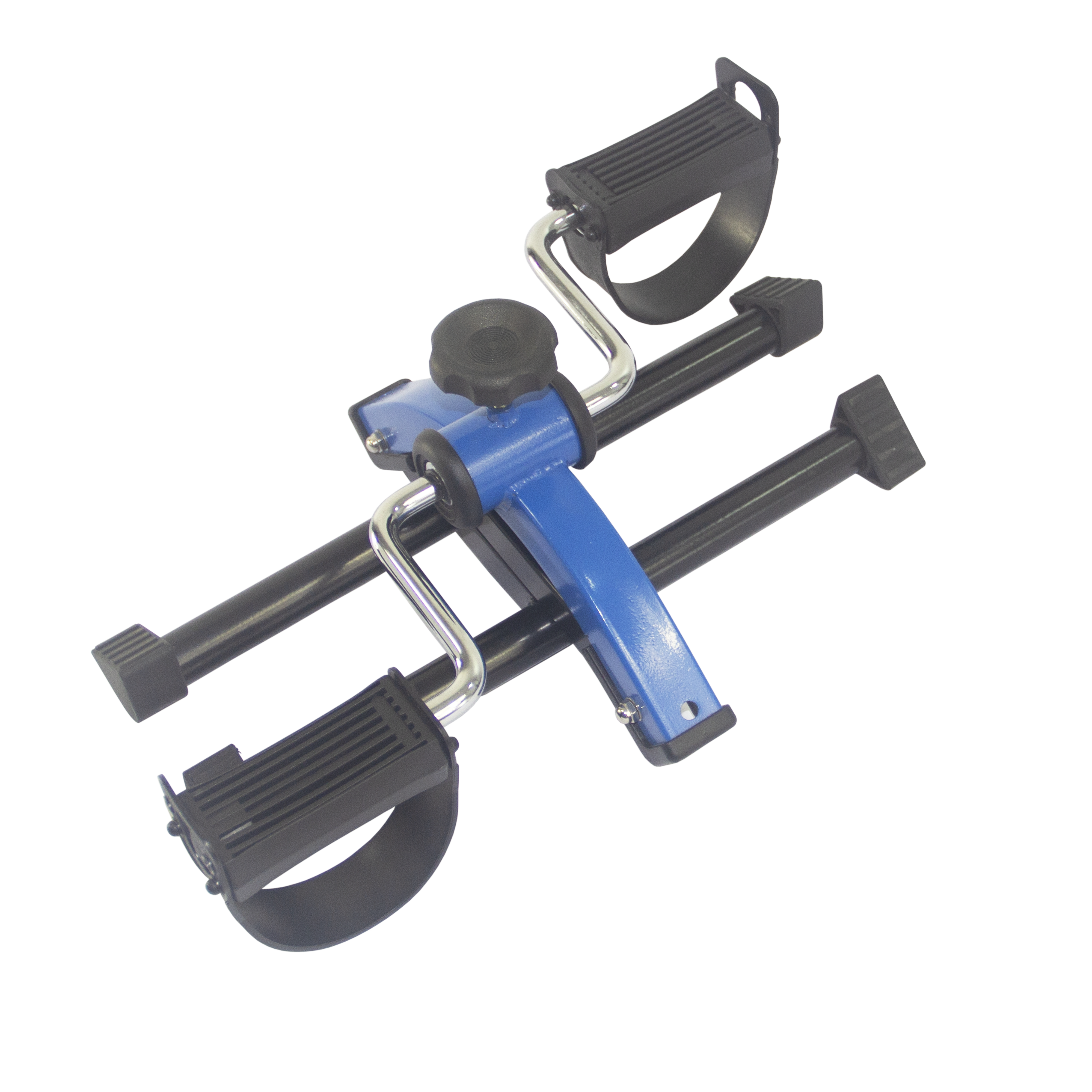
Modular physical therapy tools require a different strategy. Consider items like modular pulley systems or a folding portable rehabilitation equipment fitness bike. These devices contain hinges, moving pedals, and folding mechanisms. They are prone to snapping if they rattle against each other. The ideal solution involves die-cut corrugated inserts that hold each component in a distinct cavity. Molded pulp also works wonderfully for bracing irregular shapes. For heavier modular pieces, custom-engineered polyethylene (PE) foam blocks offer superior shock absorption. They gently lock the folding mechanisms in place, preventing micro-vibrations from stressing the metal hinges over long journeys.
Modern therapy increasingly relies on digital and electronic interfaces. TENS units, biofeedback sensors, and the control modules for motorized mobility aids require extreme delicacy. Mechanical shock is only one of the enemies here. Static electricity and moisture can fry a circuit board before the patient ever turns it on. Your packaging architecture must include anti-static (ESD) bagging. You should also utilize high-barrier foil pouches to prevent moisture ingress during humid maritime shipping. Finally, you need vibration-dampening foam isolation. This suspends the delicate electronic component away from the hard outer walls, dissipating kinetic energy before it reaches the circuitry.
| Equipment Profile | Typical Devices | Primary Packaging Solutions | Key Transit Hazards to Mitigate |
|---|---|---|---|
| Bulky & Rigid | Cranes, Wheelchairs, Standing Frames | Triple-wall corrugated, wood crating, edge protectors | Corner crushing, floor puncture, forklift damage |
| Compact & Modular | Folding fitness bikes, pulley systems | Die-cut inserts, PE foam, molded pulp | Hinge stress, internal rattling, component friction |
| Sensitive & Electronic | Biofeedback sensors, TENS units | ESD bags, moisture barriers, soft PU foam | Static discharge, humidity, high-frequency vibration |
Choosing the right materials dictates how well your equipment survives the modern supply chain. You must evaluate these components strictly on performance metrics rather than aesthetic appeal. This requires understanding material science and applied physics.
Foam acts as the primary shock absorber in medical logistics. However, not all foams perform the same way. You must compare Polyurethane (PU), Polyethylene (PE), and Expanded Polystyrene (EPS) foams based on your specific drop-test thresholds and fragility assumptions.
Polyurethane (PU) is an open-cell foam. It is soft, highly flexible, and excellent for extremely fragile, lightweight items like digital monitors. However, it easily bottoms out under heavy weight. Polyethylene (PE) is a closed-cell foam. It is dense, highly resilient, and offers incredible multi-impact protection. When a heavy device drops twice, PE bounces back and protects it both times. Expanded Polystyrene (EPS), commonly known as Styrofoam, is rigid and highly cost-effective. It offers great initial impact resistance but tends to shatter or crush after a single hard drop. For heavy medical gear, PE foam usually provides the most reliable multi-trip performance.
| Foam Material | Cell Structure | Best For | Performance Drawback |
|---|---|---|---|
| Polyurethane (PU) | Open-cell | Lightweight, highly fragile electronics | Lacks load-bearing capacity for heavy items |
| Polyethylene (PE) | Closed-cell | Heavy, modular mechanical devices | Higher initial material cost |
| Expanded Polystyrene (EPS) | Closed-cell (Beaded) | Rigid bracing, single-trip consumer goods | Cracks and loses integrity after first impact |
Environmental factors pose a silent threat to medical devices. You must evaluate the necessity of moisture, oxygen, and microbial barriers. Clarify your regulatory requirements early. Consumer-grade packaging works fine for basic mechanical tools like exercise bands. However, clinical environments have different rules. While non-invasive durable medical equipment does not generally require surgical-level sterile barriers, it still needs serious protection. Dust and moisture can degrade metallic finishes or compromise electronic sensors. You should use heavy-gauge poly bags and desiccants to control humidity inside the box during extended storage.
Many distributors want to adopt green logistics. You must assess the commercial viability of recyclable materials against structural necessities. Molded pulp and corrugated cardboard are fantastic, sustainable options. They recycle easily and appeal to eco-conscious hospital buyers. However, you cannot compromise on safety. The mandatory structural integrity needed for heavy rehabilitation equipment often forces you to use plastic-based foams or mixed-material crates. If a sustainable box collapses and ruins a $5,000 device, the carbon footprint of manufacturing a replacement far outweighs the benefit of the eco-friendly box. Always prioritize durability first in medical logistics.
Medical devices operate under intense regulatory scrutiny. This scrutiny extends directly to your shipping cartons. You cannot simply place a medical device in a box and hope for the best. You must comply with established industry frameworks.
The International Safe Transit Association (ISTA) sets the gold standard for packaging performance. Detail the necessity of ISTA testing for all medical shipments. You should focus specifically on ISTA Series 2 and Series 3 protocols. Series 2 tests evaluate basic transit hazards with environmental conditioning. Series 3 tests are advanced simulations. ISTA 3A simulates the intense drops and random vibrations of parcel delivery systems like UPS or FedEx. ISTA 3B simulates Less-Than-Truckload (LTL) environments, testing how pallets withstand forklift handling, tip-overs, and stacked compression in moving trailers. Passing these tests provides documented proof that your packaging works.
Traceability represents a core pillar of medical device regulation. Your packaging must accommodate mandatory Unique Device Identification (UDI) barcodes. The FDA and MDR require these barcodes to track devices throughout their entire lifecycle. Your packaging materials cannot degrade the label. If you use cheap corrugated board that sheds dust or absorbs moisture, the UDI label might peel off or become unscannable. You must specify smooth, high-hold surfaces for label placement. Furthermore, handling instructions (like "Keep Dry" or "Fragile") must remain highly visible and scratch-resistant.
Medical supply chains are rarely fast. Products often sit in distribution centers for months. Address packaging performance under extreme warehouse temperatures and extended transit times. Cardboard loses a significant percentage of its compression strength in high humidity. Adhesives holding the box flaps together can melt in hot shipping containers or become brittle in freezing temperatures. You must specify climate-resistant glues and moisture-resistant board coatings to ensure long-term structural resilience.
Transitioning to a newly engineered packaging system introduces friction. If you fail to manage the rollout, your warehouse operations will suffer immediate bottlenecks.
Highlight common failures in transitioning to new packaging. The most prevalent risk is increased assembly time on the warehouse floor. Complex foam inserts with dozens of folding pieces might look great on an engineer's screen. However, if they take a worker five minutes to assemble, your labor costs will skyrocket. Keep designs intuitive and fast to pack. Another major risk is dimensional weight creep. Sometimes engineers add too much foam, inflating the outer box dimensions. This pushes the package into a higher freight tier, destroying your logistics budget.
Shortlisting the right packaging partner requires strict vetting. You cannot rely on generic box manufacturers. You need specialized partners.
Do not overhaul your entire catalog at once. We recommend conducting a targeted packaging audit first. Identify the top 20% of your highest-damage SKUs. Focus your engineering efforts on fixing those problematic items. Once you prove the new designs reduce damage and speed up packing times, you can roll out the structural standards to the rest of your portfolio.
Optimal packaging is a strategic balance of structural engineering, material science, and supply chain economics. When you ship high-value therapy tools, you cannot leave the unboxing experience to chance. Every element, from the density of the shock-absorbing foam to the moisture resistance of the outer carton, plays a vital role in protecting patient safety and business margins.
We advise wholesalers to immediately move away from generic, off-the-shelf boxes. You must invest in engineered solutions tailored to the specific weight, fragility, and compliance needs of your inventory. This proactive approach eliminates damage, reduces freight bloat, and builds immense trust with clinical buyers.
Procurement managers should act quickly to secure their supply chains. Reach out to specialized medical packaging engineers today. Request physical sample kits to test assembly times on your floor. Ask to review their previous ISTA test reports. Finally, request a comprehensive packaging audit to uncover hidden inefficiencies in your current shipping protocols.
A: Heavy-duty double or triple-wall corrugated board works best. You should combine it with custom-routed PE foam. Adding reinforced wood pallets provides necessary rigid support. This combination easily handles massive weights while preventing puncture damage during transit.
A: Over-packing significantly increases your overall box volume. Carriers charge based on the greater of actual weight or dimensional weight. Therefore, bulky boxes lead to exponentially higher LTL and parcel costs. You need precision-engineered inserts to minimize box size without sacrificing product safety.
A: No. Non-invasive, durable medical equipment (DME) generally does not require strict sterile barriers. Surgical instruments need sterility, but physical therapy gear usually does not. However, you must still provide robust moisture and dust protection to keep the equipment pristine during long-term warehouse storage.
A: You should prioritize ISTA-certified testing capabilities first. Your partner must possess strong custom engineering skills. They should demonstrate extensive experience in handling medical device regulatory standards. A reliable supplier scales with your demand and helps optimize your overall shipping footprints.


