Professional Wheelchair & Mobility Aids Manufacturer | Feiyang Medical Phone: +86-13809226584 E-mail: fymed@vip.163.com

Author: Site Editor Publish Time: 2026-09-14 Origin: Site
Procuring a bulk order of hospital beds amplifies both the operational impact and the financial risk. A minor defect in a single unit quickly becomes a systemic liability across an entire fleet. At the decision stage, your evaluation must shift away from simple marketing claims. Buyers need verifiable engineering data, strict regulatory compliance, and proven long-term viability. A rigorous inspection protocol ensures your chosen fleet delivers on critical clinical outcomes. It minimizes maintenance downtime and protects patient safety around the clock. In this article, you will learn how to systematically evaluate mechanical durability and electronic reliability. We will guide you through inspecting surface fabrics and infection control features. You will also discover practical strategies to audit your vendor for manufacturing consistency and responsive post-sale support. By the end, you will have a clear framework for making data-driven procurement choices.
Verify precise hospital bed specifications against clinical needs and international regulatory standards (e.g., IEC 60601-2-52).
Inspect structural integrity, motor reliability, and electrical safety.
Evaluate accessory compatibility, infection control readiness, and patient surface materials.
Audit the hospital bed supplier for scalable manufacturing consistency, warranty terms, and rapid parts availability.
Mismatched bed capabilities create daily workflow bottlenecks. They also increase staff injury rates during patient transfers. Bulk purchases must map directly to your facility acuity levels. A standard medical-surgical ward requires vastly different functionalities compared to a highly specialized intensive care unit.
You must rigorously evaluate acuity matching during the initial phase. Assess core functions like precise Trendelenburg positioning and lateral tilt capabilities. Verify these features align perfectly against your target patient demographic. If your ward frequently handles respiratory distress cases, steep Fowler positioning becomes a non-negotiable requirement. A generic hospital bed may lack the specific angulation required for optimal lung expansion.
Weight capacity and physical dimensions also demand close scrutiny. Always review the Safe Working Load (SWL) documentation provided by the manufacturer. The SWL must account for the patient, the mattress, and all mounted peripheral equipment. Furthermore, measure the exact physical footprint. Ensure the frames fit easily through standard doorway clearances and elevator banks.
Finally, prioritize standardization across your entire procurement strategy. Determine if a baseline chassis can serve as a universal standard across multiple hospital departments. Standardizing a single platform streamlines ongoing staff training. It also simplifies your internal maintenance inventory by reducing unique spare parts.
Table 1: Typical Acuity Levels and Specification Requirements
Clinical Environment | Primary Patient Need | Recommended Inspection Specifications |
|---|---|---|
Intensive Care Unit (ICU) | Continuous monitoring and rapid intervention | Lateral tilt, radiolucent backrest, integrated scale, high SWL |
Standard Ward | Routine recovery and comfort | Basic height adjustment, standard Trendelenburg, durable casters |
Bariatric Care | Safe handling of high-weight patients | Expanded frame width, heavy-duty actuators, SWL exceeding 1000 lbs |
The physical chassis serves as the foundation for patient care. It must withstand continuous daily impact, constant fluid exposure, and sudden heavy loads. Evaluating mechanical scalability prevents premature equipment degradation across your entire fleet.
Begin by inspecting the weld quality and surface coatings. Look closely for robotic, uniform welding patterns. Hand-welded joints often exhibit inconsistencies. These inconsistencies create weak points under maximum stress. You should also verify the use of medical-grade powder coating. This specialized coating resists harsh chemical cleaning agents. It acts as the primary defense against early rust formation in moisture-rich environments.
Casters and braking systems represent another critical inspection node. Moving heavy patients requires flawless caster performance. Test the central locking mechanisms repeatedly. Engage the brakes and apply forceful lateral pressure to the frame. The unit should remain completely stationary. Next, evaluate the directional casters. Verify they lock in a straight line to allow single-person transport down long hospital corridors.
Best Practices for Side Rail Inspection:
Evaluate the latching hardware for zero-tolerance drop features. The rails must not slam down abruptly.
Test the release mechanisms using one hand to ensure ergonomic usability for nursing staff.
Check for long-term fatigue resistance around the pivot joints.
Ensure the rail heights meet minimum safety standards when combined with your thickest pressure-relieving mattresses.
Motor failure remains the leading cause of sudden bed downtime in acute care settings. Evaluating the internal electronic architecture is strictly non-negotiable for bulk orders. A compromised control box paralyzes essential positioning features.
Start by demanding comprehensive lifespan testing data for all linear actuators. Reputable manufacturers run extensive cycle tests to prove motor durability. During a physical sample inspection, operate all axes simultaneously. Listen carefully for abnormal grinding or whining noises. Smooth, quiet operation indicates high-quality internal gearing. Jerky movements suggest inadequate motor torque or poor alignment.
Next, verify the Ingress Protection (IP) ratings for all electrical components. Hospitals are wet environments. Control boxes, hand pendants, and under-bed motors require a minimum IPX4 rating. This rating guarantees protection against splashing fluids from any direction. Failing to verify this standard invites catastrophic short circuits during routine disinfection procedures.
Redundancy ensures patient safety during critical moments. Inspect the onboard battery backup systems. They must hold sufficient charge to execute emergency transport positioning during a sudden power loss. Additionally, locate and test the manual CPR release levers. These mechanical overrides must immediately flatten the backrest. A jammed CPR lever during a cardiac event presents a severe liability.
Chart: IP Rating Guide for Medical Environments
IP Rating | Protection Level Definition | Clinical Application Status |
|---|---|---|
IPX0 - IPX2 | Minimal to no fluid resistance | Unacceptable for acute care beds |
IPX4 | Protects against splashing water | Minimum standard for medical wards |
IPX6 | Protects against powerful water jets | Ideal for wash-down environments |
A patient bed never operates in isolation. It functions within a highly complex patient care ecosystem. The unit must proactively support strict infection control protocols. It must also seamlessly integrate alongside various peripheral medical equipment.
First, examine the mattress covers and surface fabrics. They require specialized antimicrobial properties. Look for highly durable, fluid-proof polyurethane materials. Examine the construction of the seams carefully. Welded seams offer vastly superior protection compared to stitched seams. Stitched seams often allow microscopic bodily fluids to penetrate the foam core. Always reference AHE or FDA infection control guidelines when assessing fabric compliance.
Patient entrapment poses a severe, life-threatening risk. The FDA strictly defines seven specific entrapment zones within a standard frame setup. You must physically measure these gaps using a validated compliance cone tool. Guaranteeing patient safety means ensuring no gaps exist where a head, neck, or chest could become wedged between the side rails and the mattress.
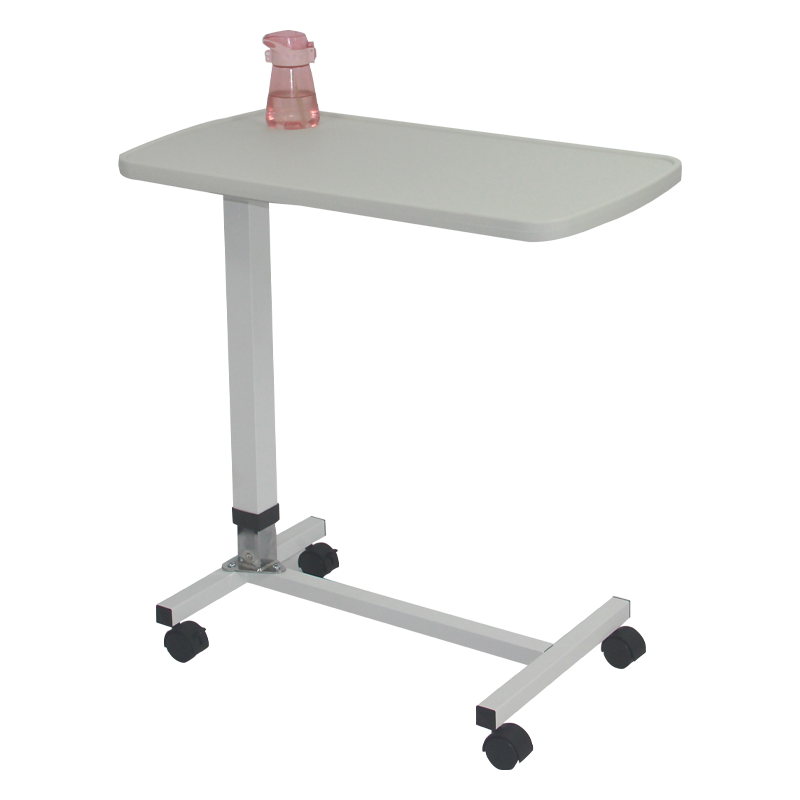
Peripheral integration testing requires hands-on evaluation. Bring standard room additions into the testing space. Mount heavy IV poles. Roll patient lifts underneath the lower chassis to check floor clearance. Furthermore, test the spatial compatibility utilizing a height adjustable medical bedside table movable. You must ensure the table base slides smoothly under the frame without colliding against the linear actuators during height adjustments.
Procurement teams frequently encounter the "golden sample" phenomenon. The manufacturer delivers a flawless prototype for initial review. However, the subsequent bulk production batch suffers from severe quality fade. Protecting your investment requires structured oversight.
Series continuity demands your immediate attention. Many hospitals purchase diverse models across a single nursing bed series. You might mix specialized long-term care units alongside acute care models. When doing this, verify cross-model interchangeability. Common parts like hand remotes, caster wheels, and actuator motors should be universally compatible. This strategy significantly reduces the burden on your biomedical engineering team.
Do not accept delivery without comprehensive Quality Control (QC) documentation. Demand batch-specific inspection reports. Ask for raw material certificates and detailed Factory Acceptance Testing (FAT) records. These documents prove the factory maintained consistent quality standards during your specific production run.
Recommended Randomized Sampling Sequence:
Establish a legally binding agreement detailing your inspection rights prior to final sign-off.
Select 5-10% of the bulk shipment randomly upon arrival at your receiving dock.
Unpack the selected units and power them on immediately.
Run each unit through its full range of articulation cycles.
Compare the motor noise, weld finish, and fabric quality directly against the original prototype.
The physical hardware represents only half of your overall purchase. The product is truly only as reliable as the manufacturing entity standing firmly behind it. Rigorous vendor evaluation forms a critical step in any bulk inspection process.
Evaluate the post-sale infrastructure meticulously. Review their proposed Service Level Agreements (SLAs). Do they guarantee rapid technical support response times? Ask about their domestic spare parts inventory. A vendor relying entirely on overseas shipping for basic replacement components will cause unacceptable downtime in your wards. You need immediate access to replacement remotes, control boxes, and casters.
Next, scrutinize the specific warranty nuances. Marketing materials often boast about a "10-year warranty." However, reading the fine print usually reveals a segmented breakdown. For example, they might cover the steel frame for five years but only cover the electronic motors for one year. Understand exactly what parts carry distinct coverage limitations before committing capital.
Your final action step involves locking down the terms. Request a finalized, comprehensive procurement contract from your short-listed vendor. This document must explicitly lock in unit pricing and strict delivery timelines. It should also outline clear financial penalties for non-compliance or delayed shipments. A confident manufacturing partner will readily accept these accountability measures.
Inspecting a bulk order requires looking far past surface-level aesthetics. You must systematically scrutinize mechanical durability, electronic safety, and strict regulatory adherence. We strongly recommend testing the actuators, validating infection control fabrics, and physically measuring entrapment zones. By demanding transparent factory documentation, you eliminate the risks associated with batch inconsistencies. Ultimately, a rigorous, evidence-based evaluation process protects your major capital expenditure. It ensures long-term operational efficiency and elevates standard patient care. Contact an engineering team for a technical consultation or request a physical sample unit for your facility's internal evaluation today.
A: Request full certification documents from your vendor. These include ISO 13485 certificates, CE marks, and FDA registration records. You should also ask for third-party testing laboratory reports. These reports must explicitly detail compliance against IEC 60601-2-52 standards. Internal factory certificates are insufficient for bulk purchases. Independent validation guarantees the equipment meets international electrical and mechanical safety thresholds.
A: You can generally expect 7 to 10 years of functional life for acute care units. However, this lifespan heavily depends on two primary factors. First, the inherent manufacturing quality of the linear actuators. Second, strict adherence to preventive maintenance schedules. Routine motor testing, battery replacement, and caster lubrication directly extend operational longevity.
A: Yes. Reputable manufacturing partners frequently allow specific customizations for orders meeting minimum volume thresholds. You can specify unique caster sizes, specialized antimicrobial mattress fabrics, or integrated patient scales. Always detail these custom requirements during the initial contracting phase. This prevents production delays and ensures the final batch strictly mirrors your specific clinical workflow needs.


