Professional Wheelchair & Mobility Aids Manufacturer | Feiyang Medical Phone: +86-13809226584 E-mail: fymed@vip.163.com

Author: Site Editor Publish Time: 2026-09-06 Origin: Site
Procuring mobility aids at scale presents a unique challenge for healthcare administrators. Outfitting a large rehabilitation facility, a sprawling hospital network, or a retail distribution channel requires careful planning. Administrators face immense pressure daily. Balancing strict clinical efficacy standards alongside lean inventory efficiency is no easy feat.
Poor specification choices bring severe consequences to any organization. They lead directly to higher rates of patient non-compliance across wards. Improper equipment also elevates fall risks significantly. Furthermore, facilities waste precious budgets on unused or improperly adjustable inventory.
This article provides a definitive, evidence-backed framework to navigate these complex purchasing decisions. We evaluate critical dimensions, specific configurations, and optimal supply chain partners. Readers will gain actionable insights. You can ensure your next bulk mobility project succeeds seamlessly.
You must clearly define user needs before buying equipment in bulk. A hospital wing serves vastly different patients compared to an outpatient clinic. Administrators should evaluate the intended environment closely. This ensures purchased devices match daily operational demands.
Differentiating acute post-op recovery from long-term home use remains crucial. Acute care patients require immense physical stability. They put heavy weight onto handles during early mobilization stages. Standard models offer maximum support here. Conversely, long-term home users prioritize daily maneuverability. They navigate tight corridors and small bathrooms daily. They also value compact storage options. You must identify which scenario dominates your facility.
You cannot guess equipment sizes accurately. Review your facility admission data thoroughly. Calculate exact ratios for standard, bariatric, and pediatric users. Heavy-duty models serve heavier populations effectively. Standard sizes accommodate most average adults. Mapping demographics prevents dangerous stock shortages. It also eliminates the burden of storing rarely used sizes.
Common Mistake: Many clinics over-order standard sizes. They neglect bariatric options entirely. Heavy patients then face delayed mobilization. Always maintain a strategic reserve of heavy-duty models.
Physical environments dictate allowable equipment dimensions strongly. Narrow facility doorways restrict wider bases. High threshold transitions pose tripping hazards. Thick carpets hinder standard rubber glides. Hardwood floors require non-marking tips. You must audit these environmental factors early.
Environmental Considerations and Recommendations
| Environmental Factor | Challenge Presented | Recommended Solution |
|---|---|---|
| Narrow Doorways | Wide bases cannot pass through easily. | Select compact indoor configurations. |
| Thick Carpeting | Standard rubber tips drag and stick. | Utilize ski glides on rear legs. |
| Outdoor Terrain | Small wheels catch on uneven paving. | Deploy large-wheeled rollator models. |
Standardization streamlines inventory management significantly. It allows clinical staff to deploy equipment faster. Establishing baseline walking frame specifications guarantees safer patient outcomes. Focus on adjustability, structural strength, and footprint sizing.
Proper height prevents severe posture issues. Push-button adjustability serves as the industry standard. This mechanism allows fast incremental changes. Clinical measurement protocols require precise alignment. Caregivers align handgrips beside the user's wrist crease. The user stands tall during this measurement. Their elbows should maintain a slight 15-degree bend. Highly adjustable frames accommodate diverse populations seamlessly.
Structural differences dictate user safety margins. Standard aluminum frames usually support up to 300 lbs safely. They remain lightweight for frail users. Bariatric models use reinforced steel crossbars. They securely support 500 lbs or more. You must never assign a standard frame to a bariatric patient. The aluminum tubing bends under excessive downward force.
Width and depth dimensions impact daily navigation. A wider base provides maximum fall prevention. It offers an expansive center of gravity. However, wider footprints complicate indoor navigation greatly. Users struggle through narrow residential bathroom doors. A narrower base improves maneuverability significantly. Caregivers must balance fall prevention against functional indoor mobility.
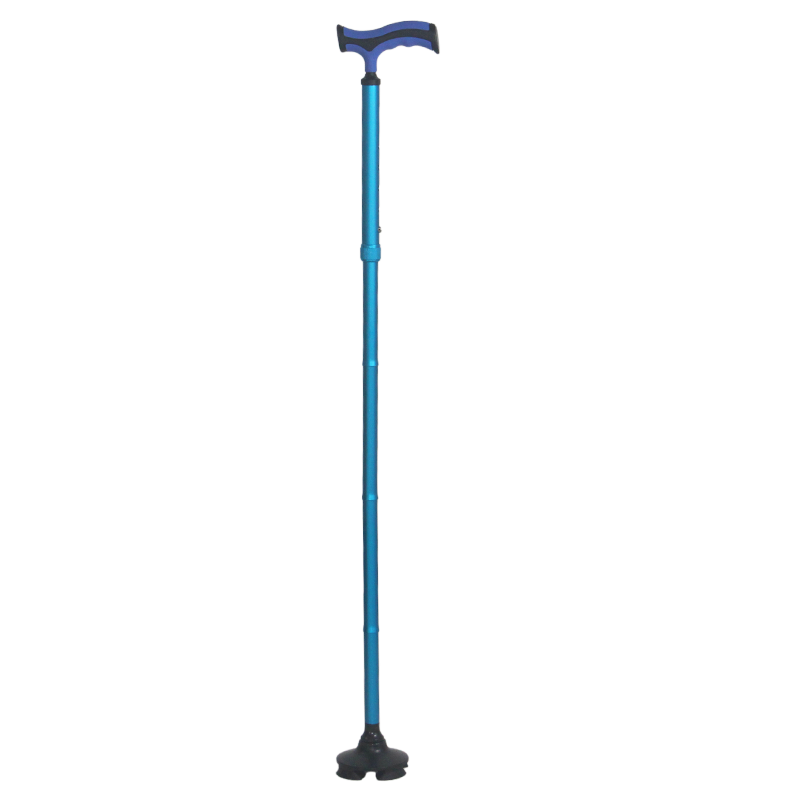
A comprehensive walking aid series includes diverse models. Different rehabilitation stages require different configurations. Sourcing a broad portfolio ensures every patient finds appropriate support.
Standard non-wheeled frames provide maximum weight-bearing stability. They suit early post-op recovery perfectly. However, users must lift the frame completely to step forward. This action takes a severe physical toll over time. Weak patients experience rapid upper-body fatigue. Standard frames work best for short-distance transfers.
Wheeled configurations increase walking efficiency dramatically. Front-wheeled models suit patients lacking upper-body strength. Users push the device forward smoothly. They do not lift it repeatedly. This encourages a much more natural gait pattern. Rollators feature four wheels and hand brakes. They suit higher-functioning users navigating outdoor spaces. Clinics often utilize two-wheel variants for indoor rehabilitation.
Storage requirements demand efficient folding mechanisms. Single-button releases work well for most users. However, they require moderate finger strength. Two-button mechanisms offer distinct independent side folding. Paddle-release systems suit arthritic hands perfectly. Users depress paddles using their palm rather than a single finger. Evaluate folding ease carefully based on patient dexterity.
Sourcing a cohesive product line yields strong operational benefits. Staff learn one locking mechanism deeply. Materials remain consistent across all devices. This includes transitioning from a heavy-duty bariatric model down to a foldable aluminum medical walking stick cane. Consistent styling and operation build patient confidence. It also simplifies spare parts inventory dramatically.
Daily commercial use degrades equipment rapidly. A single walking frame requires ongoing maintenance checks. Facility administrators must plan for structural fatigue. Proper cleaning protocols protect vulnerable patients from infections.
High-failure points emerge quickly in commercial environments. Rubber ferrules degrade after weeks of abrasive floor contact. Worn tips lose traction completely. This creates immediate slip hazards. Polyvinyl chloride grips crack under repeated stress. Wheels gather hair and debris around the axles. Maintenance teams must inspect these specific vulnerabilities weekly.
Best Practice: Establish a routine inspection schedule. Replace rubber glides the moment tread patterns disappear. Do not wait for the internal metal washer to pierce the rubber.
Hospitals deploy harsh chemical cleaners constantly. Sterilization protocols destroy porous materials rapidly. Open-cell foam grips absorb fluids easily. They trap dangerous pathogens inside. Avoid these materials entirely in acute care settings. Select solid synthetic grips instead. They withstand heavy bleach wiping without degrading.
Industry-standard fall prevention methodologies prioritize proper sizing. Improper staff training leads to incorrect height adjustments. Staff might assign an inappropriate configuration to a fragile patient. A patient receiving a fast-rolling device too early risks severe injury. Clinics must conduct mandatory equipment training quarterly. Evidence shows standardized training reduces equipment-related falls substantially.
Your supply chain partner impacts project success heavily. A reliable walking frame supplier provides more than just inventory. They offer regulatory compliance, transparent shipping, and robust aftermarket support. You must vet them thoroughly.
Mandatory compliance markers mitigate facility liability. You should look for active FDA registrations first. CE marking proves compliance across European markets. ISO 13485 certification demonstrates strict medical manufacturing discipline. Never purchase uncertified mobility equipment. Unregulated frames often feature weak welding joints. They fail catastrophically under heavy patient loads.
Bulk procurement demands clear logistical timelines. Evaluate quoted lead times carefully. Clarify minimum order quantities upfront. Phased project rollouts require scalable supply partners. Ask how the manufacturer handles sudden demand spikes. A transparent partner provides weekly production updates. They never hide manufacturing delays behind vague promises.
Replacement parts keep fleets operational longer. Question suppliers regarding specific parts availability. You need easy access to glides, wheels, and grips. A low unit purchase price means nothing eventually. It becomes irrelevant if you discard entire frames over missing tips. Demand a comprehensive spare parts catalog before signing contracts.
Follow a structured approach before finalizing bulk orders. Do not rush procurement decisions based on glossy brochures.
Selecting the correct equipment dimensions requires meticulous planning. You must align clinical safety standards closely alongside operational durability. Standardizing sizes reduces inventory bloat effectively. Analyzing environmental constraints prevents dangerous mobility mismatches.
We strongly recommend conducting a thorough pilot test first. Distribute two or three selected models among physical therapy staff. Gather feedback from a small patient cohort directly. This small step exposes hidden design flaws before massive bulk rollouts occur.
Take action today to protect your facility. Audit your current mobility equipment specifications immediately. Discard worn or non-compliant units from your inventory. Contact a qualified manufacturing partner soon to schedule a comprehensive, project-specific consultation.
A: Apply the 80/20 rule for bulk orders. Stock highly adjustable standard sizes for 80% of your inventory. Keep a strategic 20% reserve dedicated to bariatric and pediatric sizes. Standard adjustable frames usually cover heights from 5’3” to 6’2”, accommodating most adult patients comfortably.
A: A standard frame offers maximum weight-bearing support. It requires the user to lift it during each step. A rollator features four wheels and hand brakes. It suits faster gait speeds but offers less downward stability. Rollators work best for advanced rehabilitation stages.
A: No, replacement parts are rarely universal. While aluminum tube diameters often measure a standard one inch, other components differ. Proprietary folding mechanisms, specific wheel mounts, and molded grips usually require supplier-direct replacements. Always verify parts availability before purchasing.
A: An aluminum frame typically lasts three to five years under heavy facility use. This lifespan depends strictly on routine maintenance. You must replace rubber glides and clean wheel axles monthly. Neglecting structural checks accelerates metal fatigue and joint failure.


