Professional Wheelchair & Mobility Aids Manufacturer | Feiyang Medical Phone: +86-13809226584 E-mail: fymed@vip.163.com

Author: Site Editor Publish Time: 2026-08-26 Origin: Site
Procuring commercial-grade mobility equipment involves incredibly high stakes. Healthcare facilities and rental fleets face rigorous operational demands daily. Fleet managers routinely struggle to secure reliable equipment. Consumer marketing claims often obscure harsh clinical realities. Retail chairs look appealing in glossy brochures. However, they fail rapidly in demanding commercial environments. Poor specification choices lead directly to rapid equipment degradation. They also trigger severe user discomfort. Unplanned replacements drain facility budgets extensively over time. You need a highly systematic approach to procurement. This guide delivers a strictly evidence-based evaluation framework. We translate complex clinical and operational needs into precise manual wheelchair specifications. You will learn how to properly assess structural integrity. We explain how to match ergonomic dimensions to specific patient needs. We also outline how to select cohesive fleets and vet vendors properly. Read on to discover the exact criteria you need for your next major equipment purchase.
Commercial environments subject mobility chairs to continuous, high-impact use. Hospitals, airports, and large rental programs demand extreme structural resilience. Users constantly fold, unfold, and bump these chairs into hard doorframes. Consumer-grade frames quickly warp or completely fail under these harsh conditions. They simply cannot withstand 24/7 facility abuse. You must evaluate core materials closely before buying.
Steel provides a very high weight capacity. Historically, institutional buyers relied on steel for its overall ruggedness. However, steel rusts easily in damp environments. It also adds massive excessive weight to the chassis. Heavy chairs exhaust your nursing staff quickly.
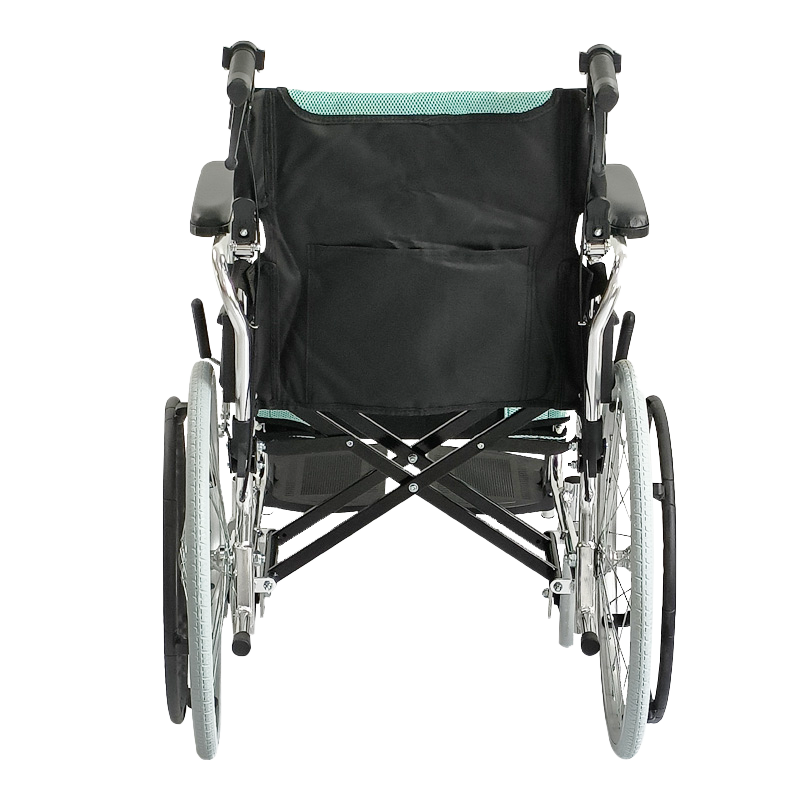
Aluminum solves many legacy problems effortlessly. Facilities increasingly prefer a lightweight portable aluminum manual wheelchair lightweight frame. These lightweight properties prove absolutely essential for rapid patient transport. They drastically reduce daily staff fatigue. Caregivers maneuver them effortlessly through crowded hallways. You just need to ensure the specific tubing gauge meets strict commercial weight-rating standards. Thick-walled aluminum tubing rivals steel in tensile strength. It achieves this without the crushing weight penalty.
Always scrutinize weight capacity thresholds carefully. Standard commercial models typically hold 250 to 300 lbs safely. Heavy-duty or bariatric frames support 350 lbs or much more. You must match the frame rating to your specific patient demographics. Overloading a standard frame causes catastrophic structural failure. It creates severe liability risks for your facility.
Cross-brace design heavily impacts structural longevity. Single cross-brace mechanisms save weight and lower upfront costs. Double cross-brace designs significantly reduce frame flex. They provide much better long-term durability during continuous folding cycles. Double cross-braces resist side-to-side torsion better. We highly recommend them for active rental fleets.
You should also ask manufacturers about their dynamic testing protocols. Reputable factories perform double-drum testing. This process simulates years of use by running the chair over uneven rollers. They also conduct drop tests. These verify frame weld integrity completely. Commercial aluminum frames must survive at least 200,000 cycles on the testing drum. This ensures they survive harsh real-world environments.
Table 1: Material Comparison for Commercial Fleet Use
| Specification Feature | Traditional Steel Frame | Commercial Aluminum Frame |
|---|---|---|
| Weight Profile | Extremely heavy (often 40+ lbs) | Highly lightweight (often under 35 lbs) |
| Corrosion Resistance | Low; prone to rust over time | High; naturally resists oxidation |
| Caregiver Fatigue Impact | Increases physical strain steadily | Reduces daily push strain significantly |
You must align technical specifications to Occupational Therapy (OT) requirements. Good posture management remains absolutely non-negotiable in clinical settings. Self-propulsion efficiency matters greatly for independent and active users. Poorly fitted chairs cause irreversible physical harm.
Seating dimensions directly dictate patient comfort and safety.
Pressure mapping technologies often reveal hidden dangers. Incorrect seat depth causes dangerous shear forces. When a seat sits too high, users slide forward constantly. This sliding action shears the skin tissue. It creates devastating sacral wounds.
Axle adjustability directly influences the center of gravity. Adjusting the axle forward increases maneuverability instantly. Moving it backward increases rearward stability for double-amputee patients. Adjustable rear axles proactively prevent dangerous backward tipping. They also optimize overall push-rim mechanics. Proper axle alignment reduces user shoulder injuries significantly. Therapists fine-tune the seating angle precisely. This distributes user weight across the thighs evenly.
Component modularity enables safe and dignified lateral transfers. Swing-away footrests clear the path for supported standing. Elevating leg rests manage lower extremity edema effectively. Removable desk-length armrests allow users to slide laterally. They can transfer smoothly onto beds or toilets. Fixed components trap users and force awkward lifting maneuvers.
Buying disparate, one-off chairs creates a massive maintenance nightmare. Mixed fleets complicate compliance protocols. Replacement parts never match across different brands. Staff training becomes a chaotic and ongoing burden.
Standardizing your procurement strictly solves this problem. You should build your entire facility fleet around a specific wheelchair series from a single manufacturer. This unified strategy centralizes your operations cleanly.
Evaluate different series types based on specific facility needs:
Scalability depends entirely on component interchangeability. Ensure your chosen series shares common wearable parts. Casters, armpads, and bearings should cross over seamlessly between models. This shared architecture lowers inventory costs immediately. Maintenance teams memorize repair protocols faster. Facility downtime drops dramatically.
Wheel specifications heavily dictate long-term clinical outcomes. They directly impact overall rolling resistance. They determine maintenance schedules and daily user safety. Ignoring wheel specs leads to frequent breakdowns.
Rear wheels and tires require careful and deliberate selection. Solid urethane tires eliminate flat-tire maintenance entirely. Commercial fleets rely on them heavily for this reason. Pneumatic tires offer much better shock absorption. Active users traversing rough outdoor terrain prefer air-filled tires. Push-rim materials also matter immensely. Aluminum rims slide easily through the hands. Vinyl-coated rims provide extra grip for users lacking hand strength.
Consider the wheel core design as well. Traditional wire spoke wheels offer great shock absorption. However, they require frequent tensioning and truing. Maintenance teams hate them. Composite mag wheels provide the perfect solution. They remain entirely maintenance-free. They never lose their shape. They withstand heavy sideways impacts effortlessly.
Front casters dictate environmental maneuverability. Size determines the functional operating environment. Eight-inch casters clear outdoor thresholds and elevator gaps easily. Five-inch casters provide very tight indoor turning radiuses. They navigate narrow bathroom stalls effortlessly.
Bearing quality demands your strict attention. Always specify sealed precision bearings for commercial orders. Commercial cleaning protocols destroy cheap unsealed bearings quickly. Harsh chemicals penetrate open casings. Outdoor grit ruins standard mechanisms in weeks. Sealed bearing units withstand daily abuse effortlessly. They spin smoothly for years without needing messy repacking.
Even the most rigorous specifications fail if the vendor lacks reliable after-sales infrastructure. You need a highly trusted commercial partner. A bad vendor leaves your facility stranded with broken equipment.
Evaluate prospective partners using these strict criteria:
Demand comprehensive service manuals. A good supplier provides exploded parts diagrams online. This empowers your internal maintenance team. They can identify the exact screw or bracket needed. This eliminates guesswork entirely. It speeds up the repair process immensely.
Apply smart shortlisting logic before signing contracts. Request trial units first. Let your OT and facility maintenance teams evaluate them thoroughly. Solicit feedback from the cleaning staff. Never commit to a massive bulk purchase order without hands-on clinical testing. Field trials reveal hidden design flaws instantly.
Choosing the right manual wheelchair involves a highly delicate balancing act. You must weigh structural durability against necessary clinical adjustability. Procurement efficiency must closely guide your ultimate fleet decisions. Equipment fails when buyers ignore these intersecting needs.
Take immediate and decisive action today. Audit your current fleet carefully. Document your highest historical failure points. Count your broken casters and torn upholstery segments. Record recurring caregiver complaints. Use those specific data points to build a strict specification checklist. Submit this highly refined checklist during your next supplier Request for Proposal (RFP).
A: Standard models typically support 250 to 300 lbs safely. Heavy-duty or bariatric models are specifically rated to support 350 to 500+ lbs. You must always match the frame's weight limit to the user to ensure structural integrity and prevent accidents.
A: Specifications determine HCPCS codes. For example, K0003 applies directly to lightweight models. K0004 applies to high-strength lightweight models. Proper specification matching remains legally required for all Medicare and Medicaid claims to process correctly.
A: A high-quality commercial aluminum frame should last three to five years. You must perform standard preventive maintenance regularly. Wearable components like solid tires, bearings, and upholstery will require annual replacement depending on facility usage rates.
A: Yes, components generally cross-match perfectly within the same manufacturer's series. Standardizing your facility's fleet highly improves operational efficiency. Interchangeable parts streamline daily repairs and drastically reduce the number of unique spare parts your facility needs to stock.


